

Key Takeaways
- AI and low-code platforms are making application development more accessible than ever
- Businesses are shifting from developer-only models to collaborative development
- AI accelerates prototyping, coding, and optimization
- Natural language inputs are reducing the need for technical expertise
- Speed, flexibility, and scalability are now achievable together
- The future of development is shared across teams—not limited to IT
For a long time, building custom applications came down to one thing: access to skilled developers. If your team didn’t have enough engineering resources, ideas stayed stuck in backlogs, projects got delayed, and innovation slowed down.
That model is breaking.
Today, AI and low-code platforms are changing how software gets built, and more importantly, who can build it. What used to take months of coding can now be prototyped in days, sometimes even hours.
In this blog post, I will explain how AI is transforming app development and how developers can use it for better product delivery.
The Shift From Scarcity to Accessibility
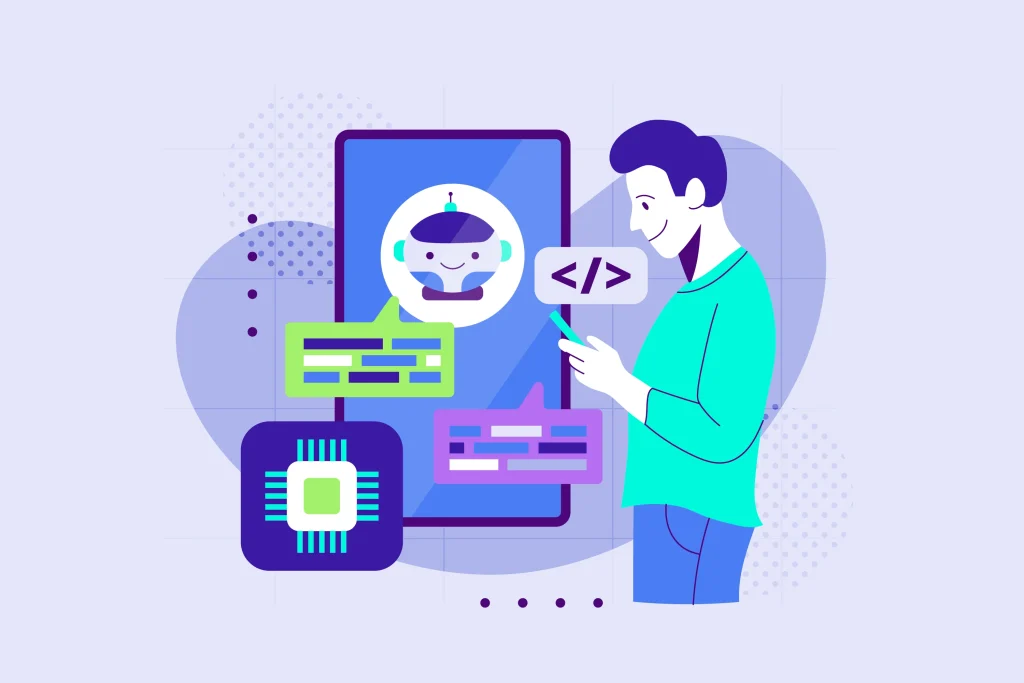
Traditional development cycles rely heavily on specialized engineers, long timelines, and rigid workflows. As demand for internal tools, integrations, and customer-facing applications increases, that model simply cannot keep pace.
Today, organizations are rethinking how applications are created. In fact, a large majority of IT leaders now support enabling non-technical users to participate directly in development efforts.
Low-code platforms are central to this shift. By replacing manual coding with visual interfaces and reusable components, they reduce the barrier to entry while still allowing for customization when needed. AI takes this one step further.
AI as the Force Multiplier
Artificial intelligence is not just accelerating development, it is redefining it.
AI-powered assistants can now:
- Generate application logic from natural language inputs
- Automate repetitive coding and debugging tasks
- Convert ideas or wireframes into working prototypes
- Suggest improvements across UI, workflows, and data models
This translates into real efficiency gains. AI coding assistants have been shown to significantly speed up development workflows, allowing teams to move from concept to execution faster than ever before.
More importantly, AI shifts the role of developers. Instead of focusing on writing every line of code, teams can prioritize architecture, problem-solving, and innovation.
From IT Bottlenecks to Business-Led Innovation
One of the biggest impacts of AI-driven low-code development is organizational, not just technical.
When business users can build and iterate on applications themselves:
- IT backlogs shrink
- Departments move faster independently
- Ideas are tested and validated earlier
- Cross-functional collaboration improves
AI effectively becomes the bridge between technical and non-technical teams, enabling both sides to work from the same platform and language.
This is especially critical as application demand continues to grow across every function, from operations to customer experience.
Rapid Prototyping Becomes the New Standard
Speed is now a competitive advantage.
AI-infused low-code platforms allow teams to rapidly create minimum viable products, gather feedback, and iterate in real time. What once took months can now be accomplished in days or even hours.
This shift enables organizations to:
- Validate ideas earlier
- Reduce development risk
- Adapt quickly to changing market conditions
Instead of committing to long development cycles, teams can continuously evolve applications based on real-world use.
The Rise of Natural Language Development
Perhaps the most transformative change is how applications are actually built.
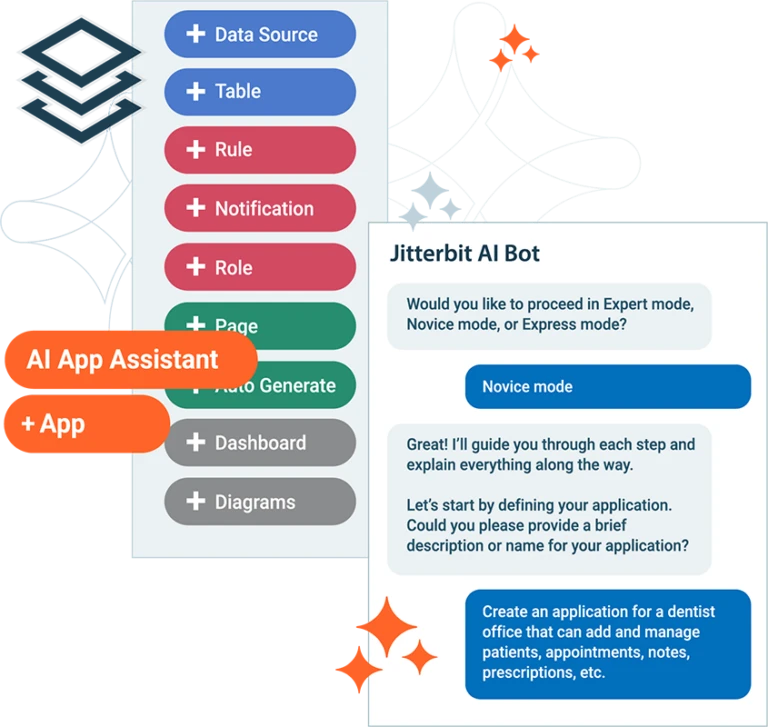
With AI, development is increasingly driven by natural language. Users can describe what they want, and the system translates that into functional applications, workflows, or integrations.
This removes one of the last major barriers to entry: the need to understand programming languages.
It also opens the door for a much broader group of contributors across the organization.
Building for Scale, Not Just Speed
While accessibility and speed are critical, enterprise organizations still require security, governance, and scalability.
Modern platforms are addressing this by combining low-code flexibility with enterprise-grade infrastructure. AI capabilities are layered into the development lifecycle, supporting everything from initial build to ongoing management and optimization.
Solutions like Jitterbit’s low-code application development platform are designed to unify these capabilities, enabling teams to build, integrate, and manage applications within a single environment while leveraging AI to accelerate each step.
The Future of Application Development
Application development is no longer limited to developers. It is becoming a shared capability across the business, powered by AI and enabled by low-code platforms.
Organizations that embrace this shift will move faster, innovate more freely, and reduce their reliance on constrained technical resources. Those that do not will continue to face the same bottlenecks that have slowed development for years.
The barrier to building software is no longer technical. It is whether organizations are ready to rethink who gets to build it.
