

Tech operations teams are managing more responsibilities than ever before. Modern environments now require teams to handle infrastructure, security, compliance, cloud costs, incident response, and internal automation at the same time.
As a result, many companies are reevaluating the tools they rely on and replacing older systems with platforms that reduce manual work and improve visibility across operations.
The focus in 2026 is not just on adding more software, but building a stack that is easier to manage, automate, and scale. In this article, we look at the tools tech operations teams are increasingly adding to their stack in 2026.
Top 10 Tools Tech Operations Teams are Adding to Their Stack
The following tools are commonly appearing in modern tech operations stacks as teams standardize on more integrated and automation-driven systems.
1. Finup
Finup is a spend management tool focused on controlling SaaS and cloud expenses through virtual cards and strict budget controls.
It allows tech operations teams to assign dedicated cards to specific services, making it easier to track, limit, and audit spending in real time.
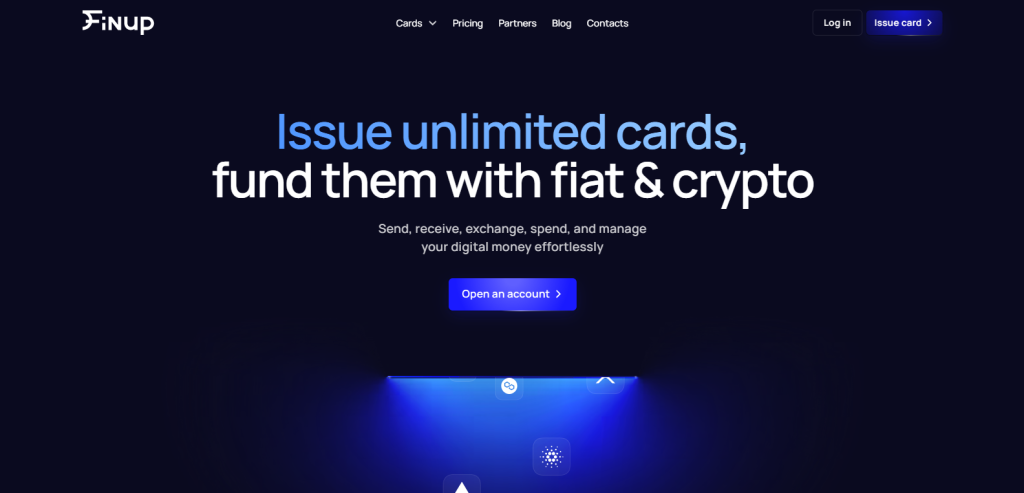
This approach reduces the risk of unexpected billing spikes and improves financial visibility across engineering teams. It is part of a broader trend where FinOps responsibilities are shifting closer to engineering and operations.
Key Features
- Virtual cards with service-level spend limits
- Merchant-level controls for cloud and SaaS billing
- Real-time visibility into operational spending patterns
2. Datadog
Datadog is one of the core observability platforms used in modern tech operations stacks. It brings together infrastructure monitoring, application performance tracking, logging, tracing, and security signals into a single system.
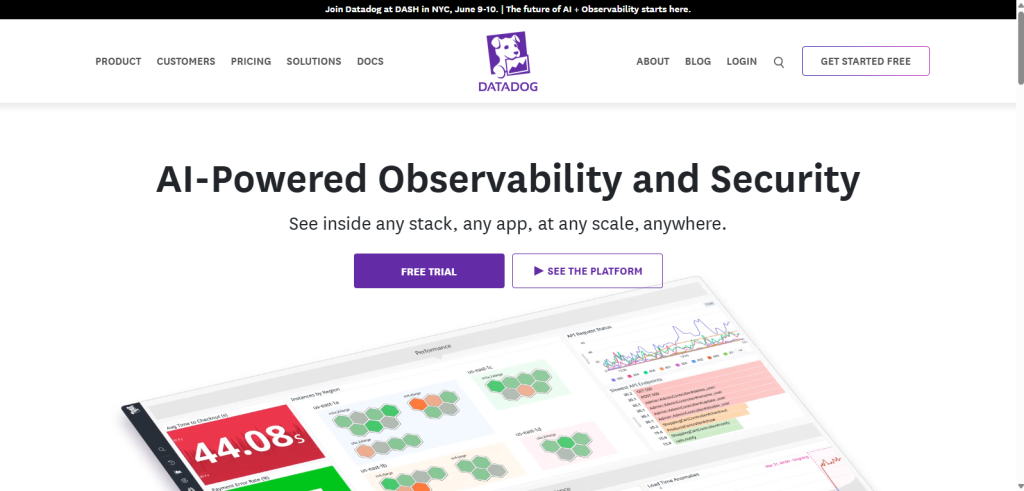
In 2026, its relevance comes from the growing need to unify performance monitoring with cost and reliability insights, instead of treating them as separate problems.
Many teams choose it because it reduces the operational overhead of managing multiple disconnected monitoring tools.
Key Features
- Unified monitoring across infrastructure, logs, metrics, and application traces
- Built-in dashboards for performance, reliability, and cloud resource usage
- Large ecosystem of integrations across cloud services and DevOps tools
3. 1Password Business
1Password Business is a credential and secrets management platform used to securely store and share passwords, API keys, and sensitive access information.
It is widely adopted because it balances ease of use with enterprise-grade security features, strong privacy controls, and protection of sensitive organizational data.
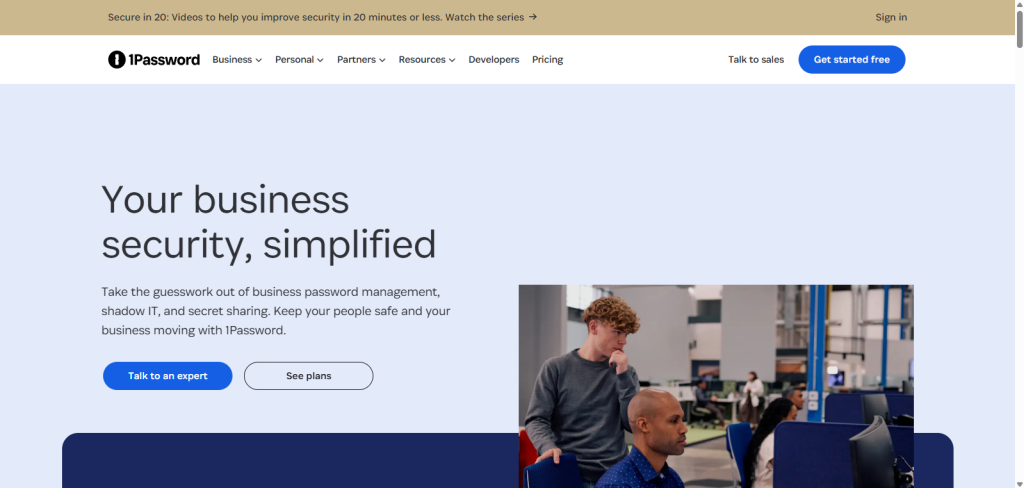
In modern tech operations stacks, it replaces ad-hoc password-sharing methods and reduces the risk of credential leakage across teams while improving overall access security and compliance.
Key Features
- Secure vaults for passwords, API keys, and secrets
- Role-based access control and team sharing features
- Integration with SSO and identity management systems
4. PagerDuty
PagerDuty is widely used for incident response and on-call management. It helps teams detect, route, and resolve production incidents by coordinating alerts and escalation workflows.
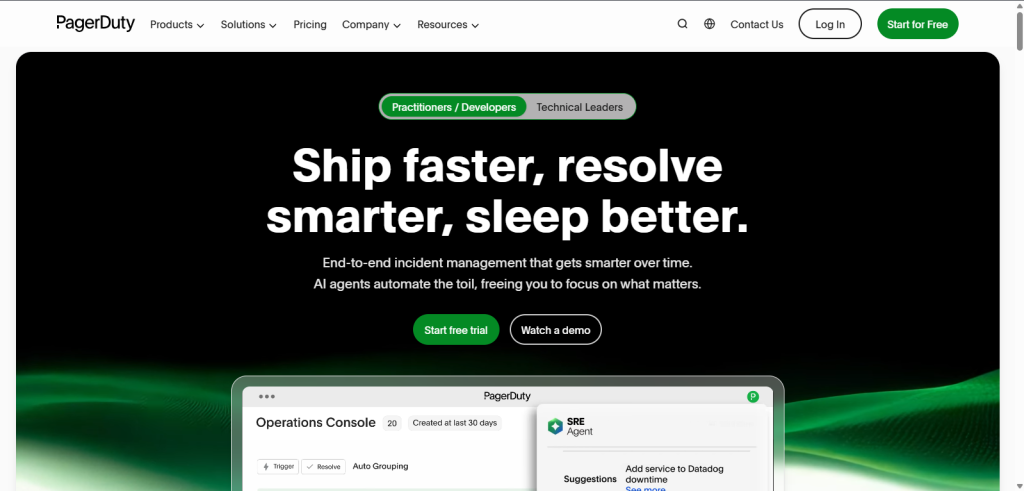
Over time, it has evolved from a simple alerting tool into a broader incident operations platform. In modern tech operations, it is often considered essential for maintaining reliability in distributed systems where downtime needs fast coordination.
Key Features
- On-call scheduling and automated alert escalation
- Incident response workflows with collaboration tools for teams
- Integrations with monitoring, logging, and observability platforms
5. Vanta
Vanta is a compliance automation platform designed to simplify security and regulatory audits.
It helps companies maintain continuous compliance for frameworks like SOC 2, ISO 27001, and others by automatically collecting evidence and monitoring system controls.
Instead of treating compliance as a periodic audit task, Vanta turns it into an ongoing process. This is especially important for SaaS and cloud-first companies that regularly face vendor security reviews.
Key Features
- Automated compliance monitoring and evidence collection
- Support for major frameworks like SOC 2, ISO 27001, and HIPAA
- Continuous tracking of security controls across cloud systems
6. Terraform Cloud / HCP Terraform
Terraform Cloud (now HCP Terraform) is a platform for managing infrastructure as code at scale. It allows teams to define infrastructure using code and then manage provisioning, state, and policy enforcement in a centralized system.
As infrastructure complexity increases, this tool helps reduce manual provisioning and ensures consistency across environments. It is widely used in teams that need structured control over cloud infrastructure changes.
Key Features
- Centralized state management for infrastructure as code
- Policy-as-code controls for governance and compliance
- Team-based workflows for managing infrastructure changes
7. Linear
Linear is a modern project and issue tracking tool designed for fast-moving engineering and tech operations teams. It replaces heavier legacy systems by focusing on speed, simplicity, and structured workflows.
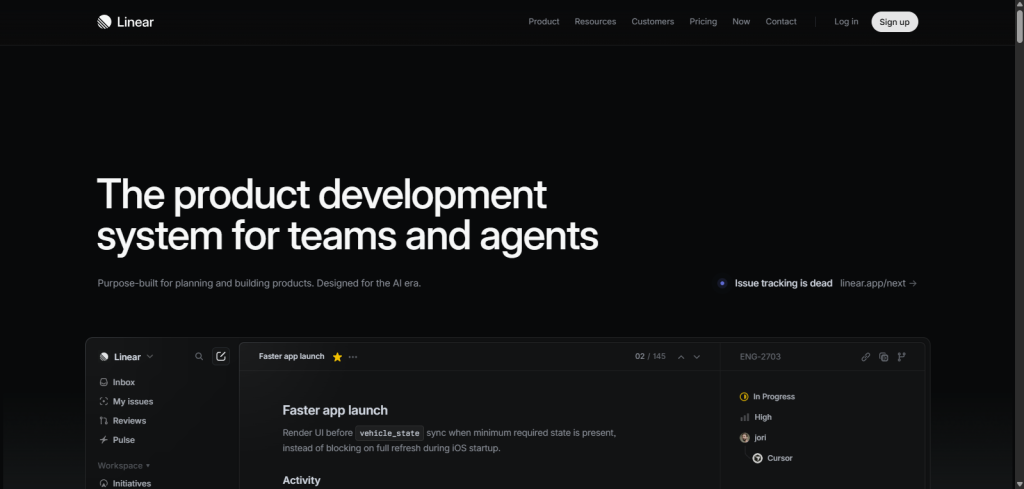
Instead of complex configurations, it prioritizes keyboard-driven navigation and streamlined issue management. In tech ops environments, it is often used for incident tracking, internal work coordination, and operational planning.
Key Features
- Fast, keyboard-first interface for issue tracking
- Simplified workflows for engineering and operations teams
- Built-in tools for roadmaps, cycles, and project planning
8. Tailscale
Tailscale is a secure networking tool built on top of WireGuard that simplifies private network access between devices and services.
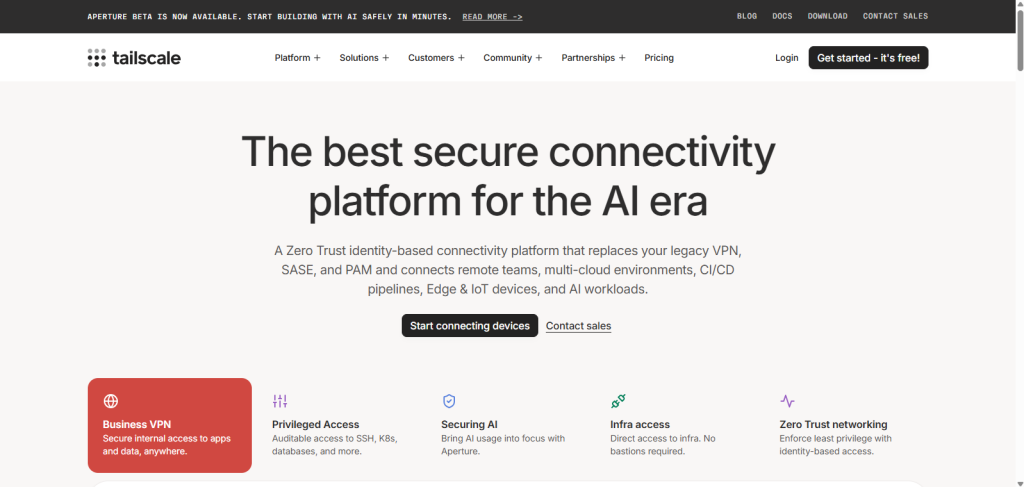
It removes the complexity of traditional VPN setups by automatically creating a secure mesh network between systems. In tech operations environments, it is commonly adopted for secure server access, internal tooling connectivity, and remote engineering workflows.
Key Features
- Zero-configuration mesh VPN based on WireGuard
- Secure device-to-device connectivity across networks
- Simple access control for teams and infrastructure
9. Better Stack
Better Stack is an observability and incident management platform designed as a simpler alternative to large-scale monitoring systems.
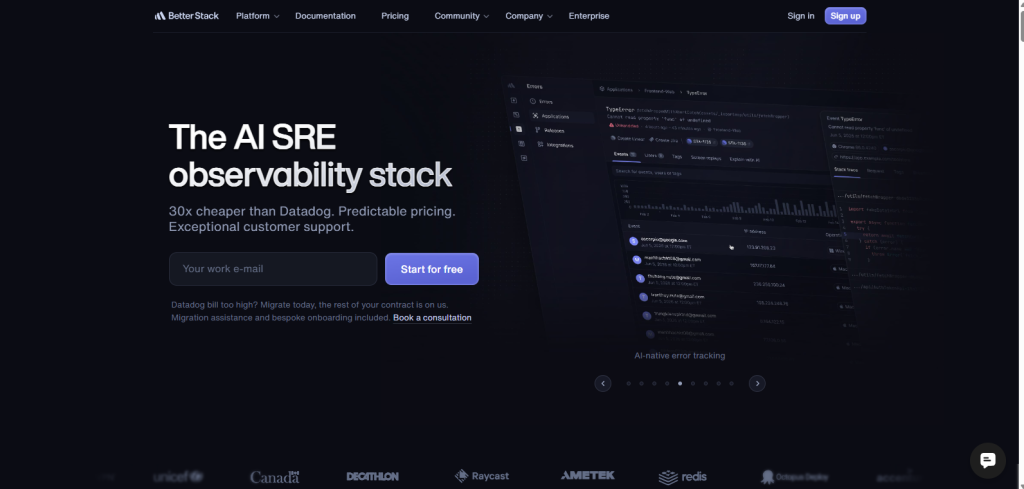
It combines uptime monitoring, logs, incident response, and status pages into a single product. It is especially useful for smaller teams that want core observability features without the complexity or cost of enterprise platforms.
Key Features
- Uptime monitoring and alerting for services
- Integrated logs and incident response workflows
- Public status pages for system transparency
10. Cursor
Cursor is an AI-assisted development tool that integrates directly into the coding workflow. It helps engineers write scripts, generate automation, and build internal tools faster by using AI inside the editor.
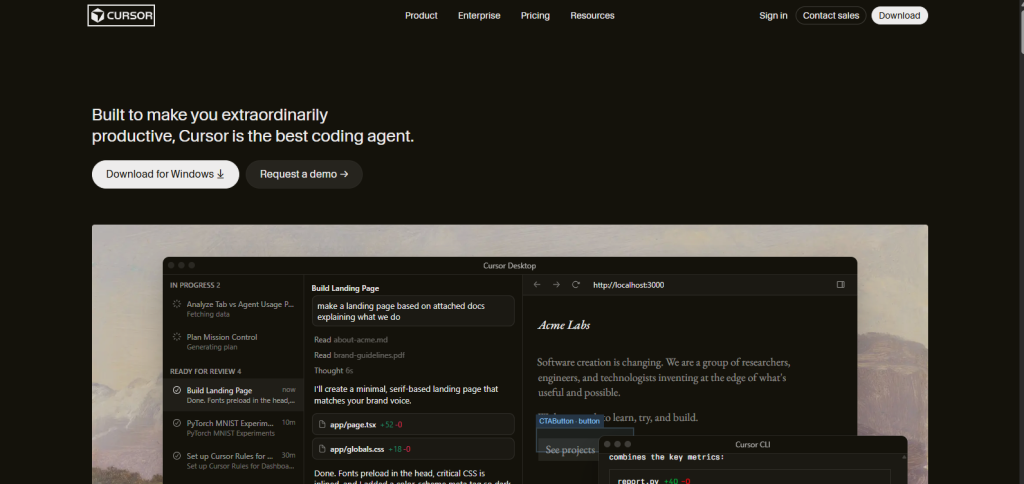
In tech operations, it is increasingly used for automation tasks, debugging, and generating operational scripts, reducing the time needed for routine engineering work.
Key Features
- AI-powered code generation and editing inside the IDE
- Useful for automation scripts and internal tooling
- Improves documentation and operational scripting speed
What to Add First If You Are Starting From Scratch
Order matters. Set up observability before anything else (Datadog or its equivalent). Add incident response next (PagerDuty). Add compliance automation as soon as you start selling to anyone who runs a vendor risk assessment (Vanta).
Then spend controls and infrastructure-as-code. Project tracking and AI tools can wait until the operational foundations are stable; adding them too early means you are using them to organize chaos rather than executing on order.
What Falls Off the Stack
The flip side of the additions is the subtractions. Several tools that were standard in 2022 are quietly disappearing from healthy stacks. Bespoke monitoring solutions are giving way to consolidated platforms.
Standalone VPN appliances are being retired. Manual compliance frameworks are being replaced wholesale by automation. Shared corporate cards are being broken up into virtual card programs. Static internal wikis are being replaced by tooling that integrates with the actual work.
Final Word On Tech Operations Tools
Tech operations stacks in 2026 are increasingly built around consolidation, automation, and clearer visibility across systems.
Instead of relying on separate tools for monitoring, security, compliance, and cost control, teams are moving toward integrated platforms that reduce manual effort and improve coordination.
The tools covered in this list reflect that shift, showing how modern operations teams are prioritizing efficiency, scalability, and tighter control over both infrastructure and spending.
Frequently Asked Questions
A tech operations stack is a set of tools used to manage infrastructure, reliability, security, and system performance. It helps teams run and monitor modern software systems more efficiently.
Companies are updating their tools to reduce manual work and improve automation across operations. Modern systems require better visibility into cost, performance, and security in one place.
Observability tools help teams monitor applications, infrastructure, and system health in real time. They make it easier to detect issues and understand system performance.
Compliance automation reduces the effort needed to meet security and regulatory standards. It also helps companies stay audit-ready throughout the year instead of preparing only during reviews.
Not all companies need them, but AI tools can improve productivity and speed up repetitive tasks. Many teams use them to assist with scripting, debugging, and documentation.
