

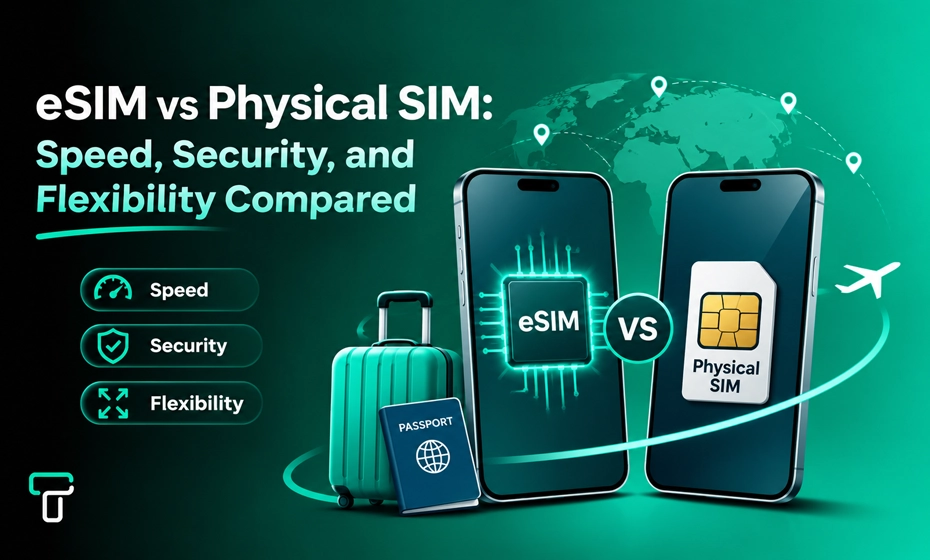
Choosing between an eSIM and a physical SIM can make a difference when traveling internationally. A physical SIM requires you to insert or replace a card, while an eSIM lets you activate a mobile plan digitally.
Both provide mobile connectivity, but they differ in activation, security, and flexibility. These differences matter when visiting multiple countries or keeping your home number active abroad.
So, which option is better for international travel? Here’s how eSIMs and physical SIMs compare, along with what travel eSIM providers such as Jetpac offer.
| Feature | eSIM | Physical SIM |
| Activation | Digital setup through a QR code or app | Requires inserting a SIM card |
| Travel convenience | Can be purchased before departure | May require visiting a local store |
| Security | Cannot be physically removed | Can be removed, lost, or stolen |
| Switching networks | Switch between installed profiles | May require swapping cards |
| Multiple plans | Stores multiple profiles on compatible devices | Depends on available SIM slots |
| Compatibility | Requires an eSIM-compatible device | Works with devices supporting physical SIMs |
1. Speed: Which SIM Gets You Connected Faster?
Getting connected with a physical SIM may involve finding a carrier store, purchasing a card, completing identity verification, and waiting for activation. Depending on the carrier and local requirements, this can take several minutes or longer.
An eSIM simplifies setup through eSIM technology, allowing you to purchase and install a mobile plan digitally, often before departure. Once you land, your phone can connect to a supported local network according to the plan’s activation conditions.
This gives you access to maps, transportation apps, and messaging services without searching for a SIM card vendor.
Which is faster? An eSIM generally offers quicker setup for international travel, although activation times depend on the provider, device, and network.
2. Security: Is an eSIM Safer Than a Physical SIM?
A physical SIM can be removed, lost, or stolen. Someone with access to the card may be able to use it in another compatible device unless additional protections are enabled.
An eSIM is embedded in the device and cannot be physically removed. Its profiles are also installed through secure provisioning systems designed to protect subscriber credentials.
However, neither option is immune to SIM-swapping fraud, where attackers trick a carrier into transferring a phone number to another SIM or eSIM. Following basic digital privacy practices can help protect your accounts while traveling
Which is safer? An eSIM reduces the risk of physical SIM theft, but both options require strong account authentication and device security.
3. Flexibility: Which SIM Is Better for International Travel?
Switching carriers with a physical SIM often means replacing the card, unless your phone supports multiple SIM slots. This can be inconvenient when traveling between countries.
An eSIM allows compatible devices to store multiple carrier profiles and switch between them through phone settings. You can also keep your home number active while using a travel eSIM for mobile data.
Some providers offer regional plans covering multiple destinations, with remote top-ups when you need additional data.
However, the number of active SIMs depends on your device, and carrier-locked phones may restrict your options.
Which is more flexible? An eSIM offers greater convenience for frequent travelers, while physical SIMs remain useful for older devices or locally purchased prepaid plans.
4. What Jetpac Offers International Travelers
Jetpac provides travel eSIM plans designed to keep travelers connected across multiple destinations without replacing physical SIM cards.
Its advertised features include:
- 200+ destinations: Data plans covering a wide range of international locations.
- Multi-network connectivity: Access to supported partner networks depending on the destination.
- Remote top-ups: Purchase additional data without replacing your SIM.
- Roaming savings: Advertised savings of up to 70% compared with traditional roaming, depending on the plan.
- Hotspot sharing: Share mobile data with other devices, subject to plan conditions.
- Essential app access: Continued access to selected apps, including WhatsApp, Google Maps, and Uber, after regular data runs out on eligible plans.
- Voice and 5G services: Advertised calling options in 50+ countries, with offers starting at $1.99 for five minutes.
- Customer support: Assistance through WhatsApp and email.
Before purchasing, check destination coverage, data allowances, plan validity, and device compatibility, just as you would when choosing other travel-friendly tech gadgets
Final Thoughts: Should You Choose an eSIM or Physical SIM?
An eSIM is generally the better choice for international travelers who want faster setup, easier plan management, and the flexibility to switch between mobile networks without replacing a physical card.
Physical SIM cards still have advantages, particularly for travelers using older phones, purchasing local prepaid plans, or visiting destinations where eSIM options are limited.
If your phone supports eSIM technology, providers such as Jetpac offer another way to manage international connectivity. The right choice ultimately depends on your destination, device compatibility, coverage requirements, and travel budget.
